Showing posts with label Stephen King. Show all posts

Sunday, 25 December 2022

Thinner, book review. (Stephen King)

A book with a very distinct message this one, and it's showing its age, too.
Like a lot of King novels (this one was originally released under his pseudonym Richard Bachman by the way), Thinner has a magical realism to it - the world ticks by and all is nice and normal, as it would be for you and I on any given day, but with a twist, a curse, an old Gypsy curse in this case, and it's one of my favourite things about this author's books. Everything is so normal bar that one thing: be it an ancient alien monster that dresses like a clown, a door in time that might help prevent the assassination of John F. Kennedy, or an old man living with a seventy year old mouse, reality is only ever skewed just a little.
Having killed an old Gypsy woman who stepped out in front of his car (he was concentration on his wife's hand down his pant rather than the road), and the police chief and local Judge whitewashing the whole affair, William (Bill) Halleck walks away, scot-free - well, he would have if the old Gypsy, Lemke, hadn't brushed his cheek on the courthouse steps and whispered that one word: Thinner.
The weight starts to drop off immediately, and the first half of this book is all about his cloths getting baggy, seeing his doctor, friends and colleagues, who, along with his wife and daughter, think it's a good thing but then start to worry, all whilst Bill is in denial, pretending to himself that he didn't hear what Lemke said. The second half is Halleck on the road searching for the Gypsy, tracking him down, and it is the better half, more fluid, emotional, but it's also where the age of the book starts to show.
The writing on a whole is okay, some of the latter chapters almost reach excellence, but when Halleck thinks of his teenage daughter as having 'coltish legs' and a random stranger unnecessarily uses the N word amongst the many other racist slurs against Gypsies, you begin to realise how times have changed.
That disappointment aside (it was written in the mid 80s - which is NOT an excuse by the way but a possible reason), the last hundred pages fly by, and as tensions rise and Halleck's weight plummets (he was 255 at the beginning, now down to 115), and the ending nears - which I won't spoil - the message I referred to at the beginning becomes blatantly clear.
Treat people how you would like to be treated.
Whether it's yourself, your loved ones, neighbours and strangers alike, and take responsibility for your actions. Think before you speak but speak anyway, but be honest, with yourself and those around you, because if you don't, something terrible could happen, something terrible like . . .
Three stars for Thinner then but only just, and no surprise that it was first published under his pseudonym.

Don't forget to search my blog for your favourite authors and books and if I haven't read them, message me with your recommendations.

Sunday, 3 October 2021

Who & what do you read? Questions I get asked as a book blogger (Pt I) Michael J Richardson

For those of you who don't know me, I've been 
reading and writing since I was a teenager (properly reading that is, not force fed books I had no interest in at school, which excludes Stig of the Dump of course, which was my first serial reading experience), so that's a good thirty years under my belt, but what floats my boat, gets me going back for more?
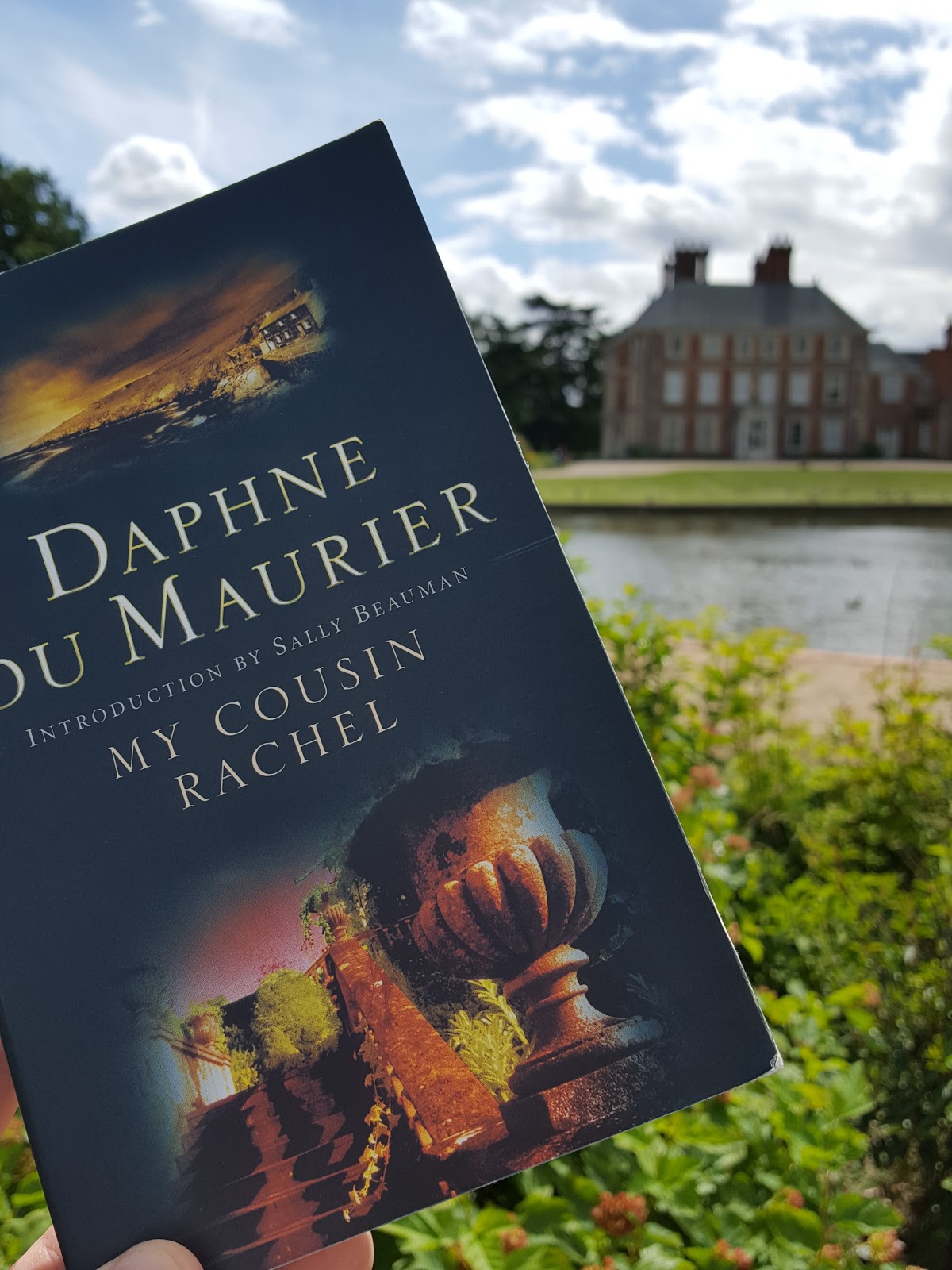
Well, why don't we start with the classics. But wait, what is a classic? A book written over a hundred years ago? Over fifty? Harry Potter will be defined as a classic in the future if not already, so do I include them? Maybe it's Austin, Bronte or Dickens (of which I've liked but not loved - except A Christmas Carol, that will always be a 5 star book in my opinion), or Du Maurier, whose My Cousin Rachel is one of my all-time favourites. Looking further afield we have Jules Verne, not bad, Platonov, weird and Kafka - seriously, I think something got lost in translation like: plot and anything that actually makes sense - and I've never really enjoyed American classics either with Moby Dick, The Scarlet Letter, The Catcher in the Rye and One Flew Over the Cuckoo's Nest all being a bit lacklustre - although I did like, The Great Gatsby and I am Legend is a masterpiece.
How about horror then? But again, what is horror? I recently read Roxane Gay's superb, An Untamed State, one of the most horrific books I've read recently but you'll only find it in the fiction section, as with Khaled Hosseini, who writes about the horrors of war torn Afghanistan in a way that pulls at your heart. I've also read The Girl with all the Gifts and its prequel (zombie apocalypse for those who don't know), but they're no more horrific than Stephen King epics' like The Stand and It, which are simply undefinable in genre. Then there are horror classics like Dracula (superb) Frankenstein (okay) and The Exorcist (seriously creepy) to consider, all having such great characters and depth that to simply call them 'Horror' would do them a great injustice.
I have always loved apocalyptic stories, too, from the short and punchy like, The War of the Worlds, I am Legend and The Day or the Triffids, to huge tomes like The Passage series and of course, the best of the best, The Stand - all fourteen hundred plus pages of it, and how the whole experience of reading books like these leaves you feeling lonely and apprehensive but with a fierce determination that if it were ever to happen to you, you'd be the good guy/girl, be on the right side and survive.
So where does that leave us? Well, this subject is far too long for one post so I'll blog part II in a few days' time and talk it through a bit more with you then. See you soon.

Don't forget to search my blog for your favourite authors and books and if I haven't read them, why not message me with your recommendations.

Sunday, 17 January 2021

2021 - The year of the reread. Books I've loved so much I'm having to revisit.

Do you have a favourite book?
Is it long, short? Did you read it at a time that was poignant? Is it a book about love that you read after a breakup? A book about an apocalyptic virus that you read last year?!! Or is it a favourite from childhood that still has you turning the pages and laughing, screaming, crying, in all the same places? Well, whatever it is - and speaking to the readers and writers I know, it seems that most of us do have a favourite, or at least a top five that's forever fluid because we just can't decide in which order to place them - I've decided to reread some of my favourites (Harry Potter excluded).
I'll need a bit of filler though because there's some big old tomes here - that copy of, The Stand in the picture, is one thousand four hundred and twenty pages, so I won't be going for volume (I read forty-one books last year so I'll be lucky to make half that this) but needs must.
Clive Barker is an author from my childhood and his ability to create worlds that seem so fantastical but so real, is both startling and brilliant, so I intend to revisit his superb, Imajica - which, along with his Weaveworld and Two Books of the Art, The Great and Secret Show and Everville are amongst those that have influenced my own writing more than any.
Having supped on the delights of Frenchman's Creek and My Cousin Rachel in recent years it feels like an age since I read Rebecca and its sequel, Mrs de Winter (did you know it had a sequel?) as does my last visit to Hobbiton, to Frodo, Gandalf and Sam, in a book that needs no introduction, that I first read as a teenager and understood a lot more as an adult (but that was near on twenty years ago now) so again, the need to dip one's toes in the waters of the Brandywine river and share that epic adventure again has begun to outweigh the compulsion to read something new.
There's nothing wrong with something new of course. I have never completed Stieg Larssons's Millennium trilogy, so this will be part reread and part first read, as will reading Stephen King's Dark Tower for the first time, having reread the first six books over the last year or two, so I'm not completely mad, I have got some new (to me anyway) books lined up for the coming year.
There's the latest Rivers of London book, False Value to read, before the next one comes out, Malorie, the sequel to Bird Box - which you might know from the film of the same name - the final book in the unbelievably superb Cemetery of Forgotten Books series, The Labyrinth of the Spirits (which I'm probably looking forward to the most) and a whole host of others that I'm sure will steer me from my path, but you can rest assured I'll keep you all posted, whatever happens.
Happy reading folks and stay safe.

Don't forget to search my blog for your favourite authors and books and if I haven't read them yet why not message me with your recommendations.

Thursday, 17 December 2020

The Dark Tower, (PtVI), Song of Susannah, book review. (Stephen King)

Well I'll be honest, I'm not really sure what happens in half of this book, the Susannah/Mia half, because when you're with her you're with Odetta Holmes (Detta/Det) and Mia - daughter of none mother of one - because they're all one person, even if they want different things! Of course this gets a little confusing from time to time, especially when they're talking to each other (which is constant) and arguing over who does what.
Susannah/Mia's baby is on its way and whilst the Calla are celebrating the destruction of the Wolves at the end of book five, she has snuck off with Black Thirteen (one of many glass orbs that have been in existence and exerted the Crimson King's bidding for a very long time - Lord of the Rings esk. The very same orb that controlled Rhea of the Coos who betrayed Roland's first and only true love, Susan Delgado in book IV of the series - of which Black Thirteen is the worst of course) and gone through the door in the cave from The Calla in Mid-World, to our world and New York.
The entire book takes place over a single day, with Susannah/Mia being in a park, finding a bewitched turtle trinket, which she uses to persuade people to do her biding - book hotel rooms, sing her songs, taxi her around town - all whilst visiting the Dogan in her mind (this being a room full of panels [I had film-set power station with banks of lights and dials in my mind when I read this] where she is able to control her unborn child's arrival, the pain she feels and weather the baby is asleep or not).
Confused yet?
Inter-spliced with this you have Eddie, Roland, Jake and Father Callahan (of Salam's Lot fame). The latter two are supposed to go to a small Maine town and track down the author of Salem's Lot (guess who) and find out how Callahan became a character in his fictional book when what happened in Salem's Lot was real - the low men, the vampires, all of it - but the door switches them around so Jake and Callahan end up in New York in search of Susannah/Mia, whilst Eddie and Roland find themselves looking for the author - who is of course the author of this book!
Still not confused?
When Eddie and Roland arrive in their 1999 all hell breaks loose and for me, this was the best bit of the book, the part I wanted more of. 'Gunslingers deal in lead' they say, which Andolini and his goons (low life Mafioso types who Eddie and Roland have already killed in the future back in book two) soon find out to their disadvantage when they ambush them - having been tipped off by Mia when she arrived - and the resulting gun battle and subsequent fifty pages or so disappears in a blur.
Where was I?
Oh yeah, so, back to New York with Jake and Callahan, hot on the trail of a very pregnant Susannah/Mia who's heading off to the Low Men to have her baby and . . . 
It ends. That's it.
The book just ends. Susannah/Mia are in the very depths of a downtown skyscraper surrounded by the Crimson King's henchmen (and chimeras) Mia finally realising that she will have no hold over her baby after its born (the child is Roland's by the way, by default - long story) with Jake and Callahan outside, ready to burst in and then . . . that's it!
The last twenty or so pages are a collection of diary entries by the fictional Stephen King about how the area that he lives in is the epicentre of strange sightings of people who may have travelled between worlds (known as Walk-ins) through doors not to dissimilar to those Roland, Eddie, Jake, Callahan and Susannah/Mia have used, and ends with him (the fictional him remember) reported as being killed by a van whilst out walking!!!
I'm so confused that a star rating will have to wait. That's not to say I didn't enjoy the book - it wasn't Kafka - and some of it was all that I love about King but, overall . . . well, maybe I'll know when I've read book seven.
 
Don't forget to search my blog for your favourite authors and books. If I haven't read them yet why not message me with your recommendations.

Sunday, 9 August 2020

Stephen King (Author focus)

Well, it was only a matter of time I suppose, before I got around to doing an author focus on Stephen King, one of my favourite and one of the more frustrating authors that I read.
To list all of the Stephen King books I have read and reread over the years and to rate them individually would be very long-winded so I won't do that here (you can search this blog for Stephen King and they'll pop up) instead I will just share my thoughts with you on this prolific writer in hope of enticing you to read some of his books.
So where do you start with an author who has written over sixty novels and hundreds of short stories, of which you have read about half?
Well, at the beginning I suppose, which for this old boy was the best part of thirty-five years ago, when I picked up a copy of The Shining (it may have been Carrie, Christine or Cujo because I remember reading them all in quick succession) and I was taken on a journey like no other.
I was cutting my teeth on English horror at the time (James Herbert being my favourite with Clive Barker snapping at his heels) when suddenly I was reading horror without the horror! Horror books which seemed more about real life than the blood-drenched cellars of the Rats trilogy and those found in The Books of Blood and The Hellbound Heart, and I was blown away.
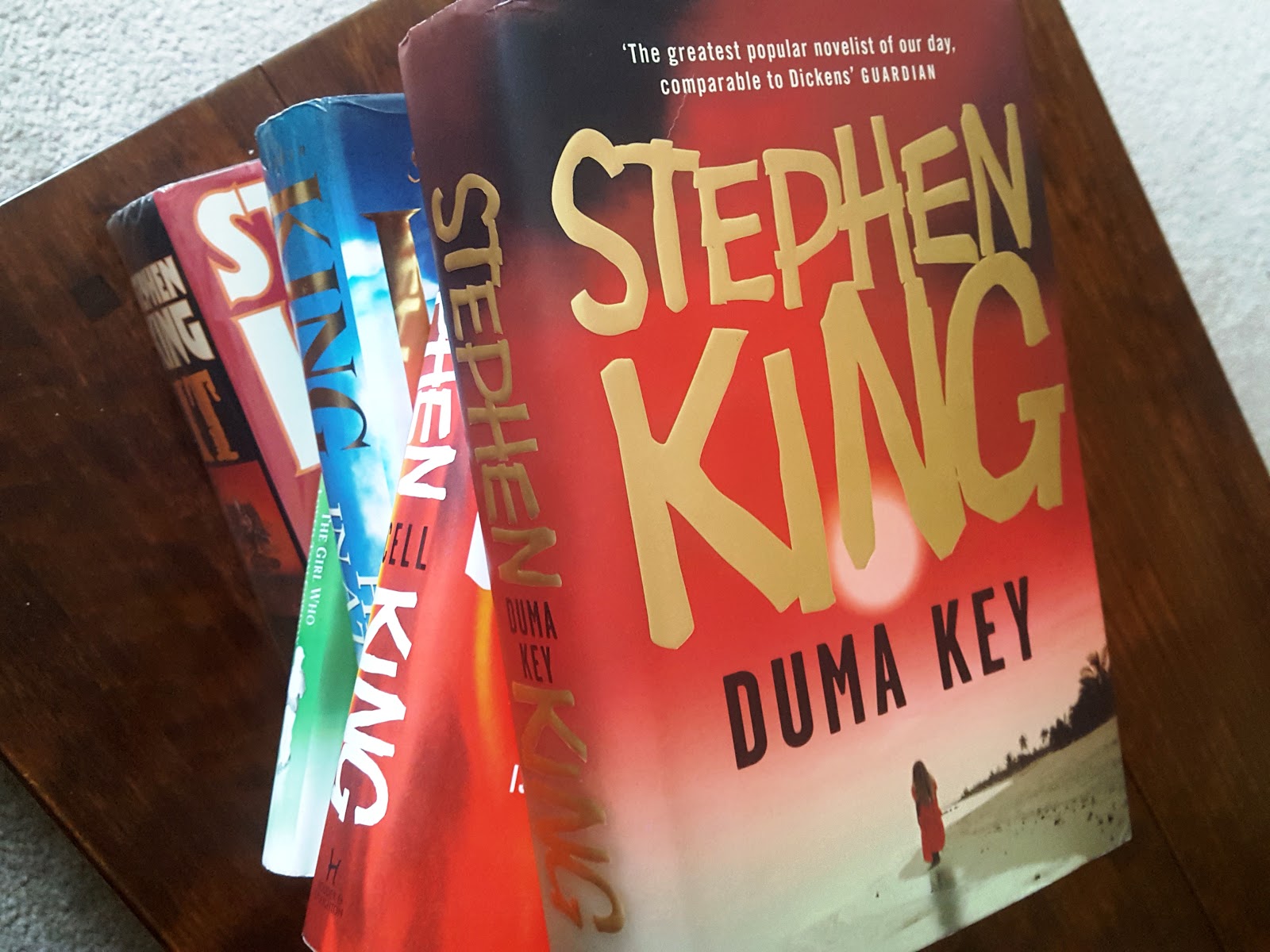
Some of King's novels are a bit lacking, and some are bloodthirsty, I won't lie, but many are no more horrific than what is for some people, normal life (a rabid bog in Cujo, a woman trying to escape an abusive relationship in Rose Madder, a man being driven mad by cabin fever in The Shining, an amputee's recovery in Duma Key, a school shooting in Rage) and with many having a hint of the supernatural thrown in for good measure I was on a roll.
They're clever too, fictional towns like Derry and Castle Rock make repeat appearances, characters hop from book to book, sometimes popping up in the most unlikely of places, and it all adds to the reality of the fiction! There's Dolores Claiborne, which is written as one continuous monologue (yes, the entire three hundred plus pages has no chapter breaks and no speech other than Dolores). The Green Mile, which was released as six mini books over the course of a few months, adding to the anticipation of what was to came next. The Dark Tower series - which I'm still yet to finish - which splices 1970's 80's & 90's New York, with Mid World - a totally fictional place that seems to be Earth but not Earth at the same time - and is simply superb on so many levels.
I eluded to 'frustrating' in my opening sentence, and as brilliant as most of King's books are, he does like to waffle, gets a bit wordy sometimes, which can be frustrating - there's a six hundred page flashback in Wizard & Glass for example - but (isn't there always a but?) when reading IT or all 1400 + pages of The Stand, I wouldn't have it any other way.
So, if you like your books fast-paced and short, fantastical but realistic, futuristic or set in the past, like tomes with dozens of characters that spread over decades, horror, the supernatural, the assassination of JFK and much much more, there's a Stephen King book out there for you, waiting to be found.
Enjoy.

Sunday, 17 May 2020

Lockdown reads from Mad Mike's writing blog.

Well, a lot of us are at home, furloughed - or worse - but as the restrictions begin to be lifted and life returns to a new normal, it means that some of us - me included - are being drafted back to work.
So what has everyone been reading during the lockdown? More, less, the same? And what genres have you gone for? Uplifting novels to perk you up or dystopian virus novels as a reality check?
I've certainly read more, as well as editing down the 87,000 word manuscript of my third novel to the much more novella (ish) size that is currently just over 70,000 but it's all been fun - I think!
Anyway, on to the book stack photo that is my lockdown reads. All very different I think you'll agree, from the world-famous literary titans that are William Golding and Khaled Hosseini to the gothically atmospheric depth of Barcelona and the small fishing village of Fishbourne, from Carlos Ruiz Zafon and Kate Mosse respectively (I'll be blogging about those two shortly) to the hilarity that is magical policing in London from Ben Aaronovitch, Stephen King's first novel, Carrie and finishing with the depravity of human beings with Gabriel Tallent's, My Absolute Darling and the superbly written but brutal book, An Untamed State, by Roxane Gay.
I liked all of these books in one way or another - some were better than others of course - but by reading such a cross-section of authors - there's both men and women here from a somewhat international spectrum - I think it helps me to not only find new favourites (whilst revisit old ones) but opens my mind to books I didn't even know existed before - An Untamed State being an excellent example.
So, for me, I will continue to search for different authors as well as read and re-read the ones I love and although I have enjoyed the time that being furloughed has afforded me, I would hope that we will never have to go through this and lose so many, ever again.
I know our situation in England is far from over so stay safe all who read this and hopefully I will get to see some of you again soon.

Thursday, 7 May 2020

Carrie, book review. (Stephen King)

So, the return to my roots continues with this, Stephen King's first novel, Carrie.
Carrie White is a loner, she has no friends - and I'd ask you to pause there for a moment and think about that, SHE HAS NO FRIENDS - and ask yourself how life would be for you, if you were in that same situation, with no-one to call when you needed a chat, no one to laugh or cry with. Pretty shitty would be my guess.
Okay, so on top of the lack of friendship, she has a matriarchal mother who is deeply religious and (as most of you may already know) hasn't told her teenage daughter anything about the natural monthly cycle of women, and so, when Carrie starts to bleed, have her first period (she is seventeen) in the communal showers at school, she thinks the worst; she thinks something's wrong, very wrong. Her classmates, however, think it's the ideal time to taunt her and throw sanitary products at her.
The basic premise of the book is that one of her tormentors gains a conscious whilst another does not, in fact, the other goes out of her way to be cruel and nasty, getting herself banned from the up and coming prom, and thinking she did nothing wrong in the first place, seeks revenge.
In a slightly odd way, this book is like a coming of age novel: you have the bully, the loner/geek, the popular beauty and her boyfriend - who are in no doubt who will be crowned prom king and queen - the nasty spiteful girl with the criminal boyfriend, the deeply religious mother and of course, telekinesis, adding yet more layers to our scene.
What I like about this book is threefold. It is written in a way where extracts of books and case studies are inter-spliced with the narrative, giving the reader a sense of reality as if the event depicted actually happened. It builds brilliantly from the very beginning and due to the aforementioned extracts, you get a sense of what's happened before it's revealed in the narrative, which pulls you through the book quickly, and thirdly, the tension between Carrie and her mother.
In spite of her mother's draconian rules, Carrie loves her deeply, but the cracks start to show the minute she gets home from school after the shower incident, with the true extent to which she will go to, to 'protect' her daughter, not felt until Carrie confesses her wish to go to prom later in the book.
There is no doubt that the highlight of the book is the last third, where Carrie literally ripped the town apart. With her peers burning alive in the school - punishment for the years of torment they have rained down on her - she then goes on a rampage, and it is superb. Exploding petrol (gas) stations, pulling down power cables to electrocute the masses, tearing down buildings, all before seeking out her main tormentor, and as a reader, you will her on, you want her to get justice, get her revenge, and it really doesn't stop until the very last few pages.
Four stars for this one then, and an excellent first King novel if you've never read him before.

Thursday, 13 February 2020

The Long Walk, book review. (Stephen King)

Another first time read for me of an old Stephen King/Richard Bachman book, and like The Running Man and Rage - which I reviewed last year - I really quite liked it.
It's a simple affair really, a hundred boys/young men have signed up for, The Long Walk, in the knowledge that they will die if they are not the last one standing. There is little premise here, but the assumption I made was that something bad had happened to the world, not Hunger Games bad, but something bad all the same; bad enough that hundreds of young men would essentially sign their own death warrant for a prize – that prize being: all and everything you could ever want or wish for.
I wasn't sure how a long walk could fill nearly three hundred pages but as is usual with King, you're halfway in before you know it and by the time you're close to finishing, you're so desperate to know who will win, that you just can't stop turning the page.
The walk begins at 9 am one unassuming morning and Garraty - our main character - and those that flank him, soon fall into an uneasy rhythm - drop below four miles per hour and you get a warning, get three warnings and the forth is a bullet in your skull, and yes, they really do kill you, so when your number's up or 'you get your ticket' as they say in the book, there's one less competitor to worry about.
There's not a lot of chit chat to start with but after a few hours, after fifty miles, after a kiss by the roadside that earns Garraty a warning, the strengths and weaknesses of Garraty and those around him start to show through, and it is here, in the characters, that the book really shines. You've got the boy with the limp who's going to be the first out but last longer than most, the loudmouth that goes surprisingly quiet as the days and miles tick by, the silent creepy boy who secretly scares them all, and due to their inadequacies, their jibes and mocking of each other, and in some cases their plain loathing, the book ebbs along like real life.
They talk about home, school, the ones they love, be it a girlfriend or a parent, and as they get ever fewer, as the miles trip past, the crowds grow and the sound of gunshots ricochet off the surrounding hills, they increasingly talk of the prize: Any and everything that they could hope or wish for, but will any of them be alive to claim it?
This is a three and a half star book for me. I thought I would like it but it ended up being better than I had anticipated.
So, one more King book down, several dozen still to go.

Thursday, 10 October 2019

Rage, book review. (Richard Bachman aka Stephen King)

A lesser-known book from the master storyteller Stephen King is the focus of today's post but it's a good story all the same.
Rage is a book about a young man – Charlie – who has issues, but the issues he has are as much a mystery to him as they are to others. Sometimes he feels sad, sometimes angry, sometimes he just feels terribly confused and does stuff for reasons he cannot explain.
The majority of this book takes place in a classroom at Charlie’s high school, where he has shot dead a teacher locked the door and holds his fellow classmates hostage. Whilst we sit with him and his fellow pupils, we go back to when he was younger, when he smashed all the windows around his house, and we hear from some of the other kids too, about what it was like for them when shit happened, and in spite of the fact that this book was written in the seventies, it reminded me a bit, in its tone and subject matter (teen angst, mental health issues, etc) of a John Green novel. (Fault in Our Stars, Looking for Alaska).
Charlie isn’t the only one with issues either. A popular girl who’s been going steady with a boy for a while admits that she's still a virgin, prompting Charlie to recants the story of when he nearly lost his virginity on a beach the year before but, in the end, wasn't up to the task. This in turn opens the door to other confessions, and before you know it, what you thought was a book about murder and insanity, becomes a book about life and how our perception of people, our prejudices, because of how a person looks, their gender, sexuality, colour or creed, is founded on the false persona that we show the world, when in reality we're completely different and screaming inside, and I liked it for that.
Rage is a short book, and combined with the excellent writing it won’t take you long to read, so grab a copy if you can (you may have to look under Richard Bachman, King’s pseudonym in the seventies and eighties to find it) but it seems that as time goes by, more and more of these older books are being re-released as King novels and based on this novella, the quicker that happens the better.
Three stars for this little gem then and on to The Running Man.

Wednesday, 31 July 2019

The Dark Tower, (PtVI), Wizard and Glass, book review. (Stephen King)

WOW, wow and er . . . okay then!
In this, the fourth part of Roland's quest for the dark tower, we are treated to possibly the longest flashback in any book I've ever read, and it is here that the wows are aimed. The rest of the book doesn't really move the story on that much hence the er, but it does deal with Blane the Mono from book three - rather poorly in my opinion - as if the author ran out of really tough riddles to fool the Mono and had to result to stupidity. Then there's the Wizard of Oz style ending where our quintet tackle the Emerald City and get back on the beam, but you can ignore all that really because the bones of this book are in the six hundred plus pages of flashback, in Mejis, when Roland was a child and fell in love and . . .
There are gun-toting cowboys guarding oil derricks and tankers full of the black stuff hauled by oxen. There is the witch, Rhea of the Coos, who is bewitched by the wizard's glass and sees all. There is Roland and his ka-tet, Cuthbert, and Alain, who have been sent to the outer reaches of Mid-World on the pretence of counting anything that can be counted, when really they have been sent away to protect them from trouble back home. Then there is Susan Delgado, the most beautiful maiden in all of Mid-World and it doesn't take long for her and Roland to become entwined in a love affair, an affair that will bring death and dishonour to many and haunt Roland for the rest of his days.
As Blood Moon gives way to the Kissing Moon and the world spins, Roland and his ka-tet begin counting, but it isn't long before the suspicions of the sheriff and his lawmen are raised. There is a standoff, which goes in the ka-tet's favour, Rhea sees Susan losing something that had been promised to the Mayor, and there is a suspicious amount of activity in the woods where the crude oil still flows.
Asides from the beginning, where Eddie beats Blane with a riddle that isn't a riddle, you just fall into the narrative and can't wait to get to the Reaping fair. There are a lot of characters in this book but they all differ in ways that keeps the reader entertained and never confused. There is death, dishonour, love, fear, and pain, but the writing is some of the author’s very best so as you speed through the near nine hundred pages, you too fall in love with Susan, fear for Roland, wonder at Alain and Cuthbert's abilities, all whilst wondering how they will ever get the better of the sheriff and his men and survive.
If a book can have you on the edge of your seat, this one can. If a book can have you gasping, biting your nails in anticipation and leave you feeling completely empty, this one can and if it wasn't for the lacklustre beginning and okay ending, it would have been another five star Stephen King classic, as it is though I'll give this one four and a half stars.

Friday, 7 June 2019

Elevation, book review. (Stephen King)

A novella from one of my favourite authors is the subject of today's post and for what it lacks in length it makes up for in traditional King quirkiness.
The book opens with Scott Carey visiting Bob Ellis, an old doctor friend of his (long since retired) about an unexpected weight loss issue that seems to make no difference to his physical appearance.
The book starts with Carey weighing in at around 225 pounds. It's been a few years since he last weighed himself so he could have been losing weight for ages without realising it but, it's quickening and he's realising it now. (If this reminds you of the book, Thinner, don't worry, the two books are really quite different).
Aside from his continued weight loss and the various theories doctor Ellis comes up with, the main tension in the book is a spat between Carey and his neighbours (they are a married lesbian couple who have a restaurant in town which the conservative town's people frown upon) and it's all because their dogs continually mess on his front lawn, which they deny.
The characters and the setting (yes we're back in Castle Rock folks, which you may remember from previous King books like Cujo and Needful Things) are immediately likable and believable, and there’s just enough backstory and conflict for the reader to be entertained.
Carey confronts the couple over the dog mess after photographing one of the incidents but gets rebuffed, so he devises a wager: If he can win the annual 12K charity run against Deidre, one of the dog's owners - who used to be a runner of almost Olympic standard - she will have to come to his house for dinner with her wife. If she wins, however, he will never mention the dog mess again.
The build-up to the 12k run is minimal but the run itself is truly epic, worthy of the time it takes to read the rest of the book alone and when the finish line comes into view and lightning rents the sky, rain lashing the town, Carey and Deidre are neck and neck, but who will win? Will one of them cheat? Will Deidre and her wife have to dine with Carey? And last but not least, will Carey ever stop losing weight?
Well, they're all fair questions, but to find out you'll have to read the book of course as you won’t get any spoilers from me and as it's only a hundred pages there's really no excuse.
Three and a half stars overall for Elevation then but if the 12k run was a short story on its own, it would get five – it really is that good.

Don't forget to search my blog for your favourite authors and books and if I haven't read them, message me with your recommendations.

Wednesday, 26 December 2018

Dolores Claiborne, book review. (Stephen King)

Dolores has a story to tell, her story, but don't think she's about to admit to killin' that bitch Vera, 'cause she ain't, she din't; she did however kill her husband, but everyone's known that for years, haven't they?
Told in one long continuous monologue, with no chapter breaks, breaks in the text, and with no interruptions from the policemen and woman who are present at her confession, this novel is a masterpiece.
Dolores is a normal, run of the mill, wife, mother, carer and all around nice person, but when Vera Donovan dies and she . . . better not give the story away here . . . the locals start to talk, point the finger at her. After all, Delores was the last person to see Vera alive, the person that spent the last few decades looking after Vera, listening to all her vile diatribe, and the person whose husband mysteriously fell down a well some years earlier.
As Dolores recants her story we fall under her spell, and so sincere is her confession that you don't think to question what might be true or false, whether her husband really was that bad, whether he really did hit on her, do the things she says he did to . . . well, we just have no way of knowing, we just trust the narrator and go with it, believing all that we are told.
It wasn't until later, whilst making notes for this blog post, that I realised this, that not once whilst I was reading the book did I question what Dolores was saying, that it might not be true, and here in is the cleverness of the author, making me question it, think about the story, the characters, days and weeks after I thought I'd finished.
Of course that question is still there, did she or didn’t she do it, and every now and then I will turn it over in my mind and wonder.
Four well deserved stars then and another King favourite.

Monday, 15 October 2018

IT, book review. (Stephen King)

My 1st edition and film tie-in copy along with themed T
O! M! G!
This book is hard for me to review objectively because IT and I have history. (See what I just did there?). I've read it before you see, twice in fact. The first time, when I was young, closer in age to the kids in the book, I saw things from their perspective and then, as I got older, I related to the adults more, and now, on my third visit, well, I just feel for them all.
This epic book runs to one thousand one hundred and sixty-six pages and has such depth, not just in the characters but in the history of the town in which they live, that in spite of its length, it has pace, firing you out from one chapter to the next.
You read the first fifty pages and you're hooked, the next two hundred pass in a blur of excitement, of reunion, of horror, and then, before you know it, you're half way through but still, new things are happening. Like the shootout in front of the pharmacy in broad daylight, where half the town came armed and ready to kill. The explosion of 1906 that killed 88 kids on an Easter egg hunt. The great flood that washed half the town away decades before and of course, the realisation that every twenty-seven years kids go missing, die left, right and centre, but with no one seeming to noticing, seeming to care. And why don't they notice, why don't they care?
IT . . . that's why.
IT has a hold over the town of Derry. People turn a blind eye, forget, dismiss, delude themselves that the missing and the dead left town, were trouble makers, fell out with their families, anything but admit the truth, but in the summer of '58', just as they break for summer vacation, seven kids become friends, become The Losers, and one of them, stuttering Bill, who lost his brother in the fall of '57', has a score to settle, a score that may well take him twenty-seven years to fulfil.
My copy from 1986
To label this book would be an injustice, to label it horror would be plain wrong, because it's a, coming of age, thriller, horror, murder mystery, sci-fi, history book, all rolled into one, and I bet you can’t say that very often, and the other thing, the worst thing about this book, (there always has to be a 'but' it seems), is that once you've raced through the first nine hundred or so pages and the end is nigh, you want it to slow down, because deep down you know, that when you turn that last page, read that last paragraph, you're gonna be left with a massive hole where those Losers where and the biggest book hangover you've ever had.
To give this book a star rating any less than six out of five would be a travesty, but as we're governed by convention I will have to settle for five.
If you haven't yet taken a journey to Derry, never been to the Barrens and met Henry Bowers, been in the thick of an apocalyptic rock fight, smelt the scorched remains of the Black Spot, been chased from 29 Neibolt street by a leper, a werewolf or Pennywise the dancing clown, you’ve never really lived.
Put simply, one of the greatest books I have ever read.

Thursday, 12 July 2018

The Dark Tower, (PtIII), The Waste Lands, book review. (Stephen King)

So, book three in the series, and this one feels a little disjointed, like a play of three acts: a beginning, a middle and an end, all good, but the intervals, the bathroom breaks if you like, are a bit lacking.
Let me explain.
Act one is about a giant cyborg bear that guards the beam, (one of twelve beams that lead to the Dark Tower), and when I say giant, I mean absolutely massive. The pace, the near death experience of Eddie and Susannah, (Susannah finally becoming a gunslinger), all has you on the edge of your seat, as does act two.
Act two is where Jake is rescued from New York again, and the connection he has with Roland and his ka-tet in Mid-World, is inescapable. As Jake edges his way through the city, getting ever closer to where he thinks he needs to be, Roland, Eddie and Susannah get ready for his arrival, and it's here that things get a bit slow; or is it just that when Jake enters a derelict house, and Susannah enters a stone circle in Mid-World - letting the Demon that resides there possess her - that the writing is sooooooo crazy good, that everything else seems dull?
Possibly!
Act three, the end of the book, where our five travellers - Jake's made it through from New York and has found a friend in a Billy Bumbler, (small furry raccoon like animal with limited vocabulary) - find themselves at Lud, a city not to dissimilar to New York, but one that has suffered from hundreds, maybe thousands of years of neglect.
Act three is good, not quite the best bit in my opinion, that's Jake in the derelict house, but I think the reason for this is found on the back cover: 'Set in a world of extraordinary circumstance', it reads, and at times, even though I know I'm reading a book of fiction, it feels like some parts are just there to plug the gaps rather than enhance the story. I suppose you could level this criticism at a lot of Stephen King novels, it can almost be a part of why we enjoy reading them so much, but here, it felt contrived.
The ending of course, isn't really an ending, because this is only book three in the series, but their run through Lud and their escape from the city on Blain the Mono, is fast paced and action packed enough to make you jump straight into book four.
Overall then, not as good as book two, but with moments of pure genius, three and half stars.

Thursday, 29 March 2018

Heart-Shaped Box, book review. (Joe Hill)


It's been a while since I read a true horror book, and now I've gone and read two in quick succession.
If the word horror scares you, or you've never read the genre before, don't worry, because unlike the bloodbaths of old, the slasher books of the 70's and 80's, (which made this author's father rather famous), the horror books of today are more subtle; this book being a good case in point.
Set in the US of A, we have an ageing rock star, Judas Coyne, (stage name), his Gothic girlfriend, Georgia, a ghost, and the sister of Coyne's dead girlfriend, who's out for revenge.
Coyne, is not only a rock star, but a collector, a collector of the strange, the weird, the eclectic, so when a ghost is offered for sale on an auction website, he just has to purchase it. When an old suit arrives a few days later, and Jude sees the ghost that he purchased, casually sitting in a chair in his hallway, things begin to fall apart.
You'd think the fact that the ghost was real would be enough, but when the ghost speaks to him, tries to control him, Coyne starts to investigate, and soon finds out that the man in life, was his dead girlfriend's step-father, and then, the journey really begins.
Coyne and Georgia hit the road. They're going in search of the dead girlfriend's sister, (the woman who sold him the ghost), and there's Ouija boards, guns, cars crashes, cut-throat razors, dogs, the constant presence of the spectre and more, and it's all rather good.
There are parts of this book that are genuinely spooky, it has a creepiness that I felt wasn't overdone, and a ghost that felt genuinely scary. There's the mad, full on, all guns blazing, inter-spliced with the cold, dead of night, hairs-on-the-back-of-your-head spooky, and it all balances out rather nicely.
What I didn't like was the fact that all the female characters seemed to have been molested as children, and that Coyne's ex-wife hadn't dispose of his illegal video when she'd found it - and when I say illegal, I mean chuck you in gaol and throw away the key illegal, which surely any rational person would have done.
So, taking all of the above into consideration, Heart-Shaped Box has its ups and its downs but gets a solid three stars; which isn't bad for a debut novel.

Friday, 16 February 2018

The Dark Tower, (PtII), The Drawing of the Three, book review. (Stephen King)

So, the gunslinger, Roland Deschain, has survived the desert and parlayed with the Man in Black, but seeing the birth of the universe has taken its toll. (Book 1: The Gunslinger. Blog post: 22/10/17).
He lies on a beach, exhausted; days, weeks, years, millennia might have passed, he doesn't know, but when ancient lobster like creatures come with the tide and take his figures, he knows it's bad, and as their poison creeps slowly through his body, he knows it could be the end.
In desperation, he crawls along the deserted beach, and on encountering his first door, he steps across that threshold and becomes: Eddie Dean - drug addict, petty criminal, bad seed - flying back to America with thousands of dollars of Class-A drugs strapped to his body. After Eddie is acquired by the FBI, released and then picked up by the mob, (the drugs having mysteriously disappeared), there's a fantastic shootout with the drug boss and his goons, which for me, is one of the highlight of the book, but, all is not well, Eddie needs a fix. No longer being in New York, (he is in Roland's world now), his drugs are somewhat harder to come by, but what lengths will he go to, to get them?
Door two, and a disabled schizophrenic. Odetta and Detta Holmes, have occupied the same space for years, each with little idea that the other exists, and what a ride. 1960's New York, thief, wheelchair bound, (she was pushed beneath a train by the man who killed Jake in book one), and with serious attitude, and, as soon as she's in Roland's world, she's of murderous intent.
Behind the third and final door, Roland becomes the man who pushed Jake and Odetta to their fates, but with Roland at the helm, Jake survives, which is really weird.
They enter a gun shop to replenish Roland's stocks, and then a pharmacy for the drugs that Roland hopes will cure the lobstrosity infection, and again, this part of the book is exceptional, but has he done enough? Will the drugs work? Or will Odetta/Detta and Eddie kill him first?
All in all, this book is about a journey along a beach, but what Roland encounters as he crawls and walks, the issues the author puts in his way, a disabled schizophrenic being just the tip of the iceberg, makes for a thoroughly entertaining journey.
In isolation, I'd say this is very nearly a five star book, but, as it is part of a series, I'm going with four and a half stars for the time being.
Book three, The Waste Lands, awaits.

Monday, 1 January 2018

Mad Mike's writing blog, book of the year 2017

Welcome friends, book bloggers avid readers alike, to my annual book of the year post. This isn't about books written or published this year; this is about the books I have read this year, and with dozens to choose from, it's no easy task.
I won't bore you with a big long list of all my books from 2017, for that you can check out my historic posts or look at Amazon/Goodreads for my reviews, so without further ado:-

In at number five: George Orwell's, 1984. This book is to dystopia, what, The Lord of the Rings is to fantasy, and it's got a lot more to do with modern society than we might care to admit. There’s constant war, a clear divide between the poor, the middle class and the elite (in wealth terms), and technology tracks your every move. Sound scary? Sounds like reality to me, and all dreamt up nearly seventy years ago. (Full review coming soon)


My number four is Justin Cronin's, The Passage; a sublime post-apocalyptic vampire epic, set in the not too distant future, and an eye opener to the possibilities of what could happen if you mess around with mother-nature. A superb blood drenched beginning to an epic trilogy. (Blog post 30/11/17)


In bronze position: The Green Mile, by Stephen King. Wow, what a world we humans have created, what horrors we perpetuate, some - as narrated here - done in the name of justice, legally. Part four, The Bad Death of Eduard Delacroix, is where you'll find the true horror in this book and it's like a punch to the face; make it through that though, and the book as a whole is fabulous. (Blog post 25/12/17)


So, this year’s runner up: My Cousin Rachel by Daphne du Maurier. Tension and suspicion at almost every turn, exquisite characters, beautifully written and I said at the time 'I implore you all, fellow book bloggers, bibliophiles, bookaholics, all the lovely people around the world that might read this post, all who might have done as I have, and left this book to gather dust, read it now,' and over six months later, I still stand by that statement. An absolute gem of a book.
(Blog post 13/06/17)


And my winner, my favourite book of 2017: Air & Angels, by Susan Hill. (Blog post 08/12/17). Going by the dates of my posts you might be thinking that I've picked my top five from books I've read more recently, but you'd be wrong, for I read Air & Angels back in the summer, it's just that its eloquence, its subtle almost poetic prose has stuck with me for all that time and, as if any more evidence is necessary, it is the book that still languishes on my bedside table, the one I pick up from time to time, and read randomly.
'Five big fat gold stars', I said at the time.


An honorary mention must go to, Harry Potter and the Deathly Hallows (and The Half Blood Prince). I've come to the conclusion that these two books together, are the end of this amazing seven book series, not just book seven, and together, they are just untouchable, but, because I read them so frequently that they would end up in the number one slot every year, (which could get a bit boring), I've given them this honorary mention instead.

Monday, 25 December 2017

The Green Mile, book review. (Stephen King)


I happened upon this six-book set on the internet a few weeks ago, and thought it was about time I added it to my collecting, and so, on arrival, I dipped in. Two hours later and I'd finished the first book and was reaching for part two.
Ever read a book you literally can't put down? A book you slip into your pocket in case you have a spare five minutes? A book you take to the little room? You know the one I mean!
Well, this is that book.
Told in the first person by an ageing ex-prison guard from Cold Mountain penitentiary, who worked on E-Block back in the late 20's and early 30's, we quickly find ourselves immersed in the day-to-day running of the establishment, the prisoners, guards and the warden's lives.
E-Block is where death-row prisoners spend their last few weeks, and it's a relatively quiet place, calm and solitary, (but for Percy Wetmore). As the reader is introduced to the various characters on the mile, (the green mile), one becomes accustom to its routines, and before you know it, you're so immersed in the 1930's American penal system, that you forgot you're reading a book of fiction.
You barely get to know some of the inmates before they visit the chair, but the main death-row prisoner is, John Coffey, a mountain of a man, but a man with a gift, a gift for healing.
King's build up, of Coffey curing the narrator's urinal infection, bringing Mr Jingles, (a mouse that's been stamped on by Percy Wetmore), back to life, and then going on to cure the warden's wife's brain tumour, is stunningly good, and the realisation towards the end of the book, that maybe Coffey didn't murder and rape the two young girls he was on death-row for, that maybe he was actually trying to help them, puts a nice twist on proceedings, but the most shocking part, the part that is at the heart of how horrific humans can be, is part four: The Bad Death of Eduard Delacroix.
Percy Wetmore is the antithesis of John Coffey: He is a cruel, vindictive, educated white man with friends in high places, and with his connections he pulls a few strings, struts around like he owns the place, even managing to convince the warden to put him 'out front' for an execution.
I won't describe the results here, you'll have to read the book, but be warned, this part will make your toes curl, (if you've seen the film, you'll have a taste of what happens), and I won't divulge how old the narrator is at the end of the book either, or which friend from the mile still visits him, or what happens to Percy Wetmore, but what I can and will tell you, is that this is one of King's finest books, (I've yet to read them all), and that you should all grab a copy and give yourselves nightmares; you'll thank me for it in the end!
Five stars then, and a very Merry Christmas to all you bibliophiles out there.


Sunday, 22 October 2017

The Dark Tower, (Pt1), The Gunslinger, book review. (Stephen King)

So, the beginning – the beginning of the longest story I am ever likely to read!
As Roland Deschain, the last Gunslinger, follows the man in black: death, preacher, shaman, et-al, across unyielding desert, for a purpose we don’t yet know, he meets a corn farmer and we learn about Roland's escape from Tull, (the last town before the world turns to dust). Thirty-nine dead and hardly a scratch!
Then, he meets Jake at a Way Station, and as the desert morphs into mountains and Jake becomes companion, we learn that the man in black killed Jake in modern day New York, brought him here: to use him, weaken the Gunslinger’s hand, give Roland something to care about, something to lose.
On entering the mountains, Roland must face the Oracle, an ancient malevolent force that will not give something for nothing, but the Gunslinger needs answers, he needs all the help he can get, and like the gunfight in Tull, I particularly liked this part. It is slightly surreal, which is the point, and feels like one of the older parts of the book; more honest, less polished maybe.
Before finally settling Ka with the man in black, Roland must let Jake go (for the good of the quest for the Tower), but will he let the boy die a second time? Will he let the slow mutants take him? Does he have a choice?
There are elements to this book that are classic King, but there are parts that feel alien, as if they were written by another author, which is somewhat explained in the introduction and forward of this revised edition. The author was only nineteen when he first started to garnish the idea for this novel, some thirty year before this edition was published.
A short novel then, (it is only a beginning after all) and a slightly surreal one, but with the battle in Tull, the Oracle in the mountain, the slow mutants and the almost biblical showdown with the man in black, a rather good introduction to the quest for The Dark Tower.
Four stars.

Tuesday, 29 August 2017

Duma Key, book review. (Stephen King)

Unlike Cell, which felt like a shortened version of a long story, Duma Key, felt like a longer version of a short story, something which is borne out by comments I have read on the internet.
Eddie Freemantle, is an ex-construction guy, who's lost an arm in an accident. He wakes up in a spiral of depression, beats his wife, who then files for divorce, and has an itching limb that no longer exists - something which I understand is true for some amputees.
So, on advice from friends and his doctor, Eddie make for Florida and ends up renting Salmon Point, (Big Pink), a large detached villa, with the most amazing views across the Gulf of Mexico.
To date, Eddie has no more than sketched a few doodles, but suddenly, and with great gusto, he begins to draw; an activity which brings him much relief.
He draws his daughter with the man she is engaged to, (even though he's never met him), he draws his old accountant, dead, calls his ex-wife and convinces her that he thinks the old boy is about to commit suicide, and saves his life. He draws his ex-wife's new flower tattoo, the one he's never seen, and he draws the face of a stranger, a man who's kidnapped and murdered a young girl, but he draws him without a nose or mouth, and the next day, said kidnapper has suffocated.
There's a lot of weird stuff going on in Duma Key, nothing more strange than the, ‘Girl in a Boat’ series of paintings, which have an uncanny resemblance to his youngest daughter, and seem to be drawing her ever closer to an old sailing boat in the distance.
I love the build-up in this book: Eddie gradually regaining his strength and purpose, the friendship that grows between him and his neighbour, (a stranger by the name of Wireman), who of course has secrets of his own, and Elizabeth, owner of Salmon Point.
Wireman is there to look after Elizabeth, the daughter of the man who used to own the whole island, and whose sister drowned, many, many years before. But there's a spirit on the island too, an evil spirit; a spirit that gives Eddie the ability to paint exquisite seascapes, to paint possible futures, but a spirit that could end up destroying everyone he loves, taking the island and much more with it.
A bit like in, ‘IT’, this spirit has been tackled before, but now, years, decades later, it is back and getting stronger, so, Eddie, Jack (Eddie's personal assistant), and Wireman must face it together.
There are some really good bit in this book: the early realisation that his drawings might be influencing real life, his relationship with his daughter and ex-wife, the art exhibition he's talked into putting on, and towards the end, the crocodile in the swimming pool incident, but overall, repetition start to creep in and spoils it a bit.
Not quite a four star book then, three and a half, but spooky enough in places to satisfy those that like a fright, and descriptive enough to make me feel like I'd been to the Florida Keys and that my arm was itching!