Showing posts with label WWII. Show all posts

Wednesday, 8 January 2025

Mad Mike's Writing blog, book of the year 2024

Welcome friends, book bloggers and avid readers alike, to my annual book of the year post. As usual, this post is not about books written or published in 2024, it’s about books I have read. I won’t bore you with a full list, for that you can look me up on Goodreads so, without further ado,

In at number five is: The Familiars by Stacey Halls
Great characters, superb writing and centred around an episode in history I knew nothing about - The Pendle Witch trials of 1612 - The Familiars is a fast-paced historical thriller which drips with secrets, intrigue, fear, hypocrisy and witches, with a constant inference of injustice, in spite the tenacious efforts of or heroine, seventeen-year-old mother to be, Fleetwood Shuttleworth.
The power struggle betwixt Fleetwood and her philandering husband and the pace and tone of the writing reminded me very much of the late great de Maurier and Frenchman’s Creek, which is why this superb debut novel earnt itself four stars and a place in my top five.

 
In fourth place: The Ocean at the End of the Lane by Neil Gaiman
Magical.
Scary, too, but magical.
Mixed with fear, lose, loneliness and bitter memories of a time gone by, Gaiman manages to weave a tail that can be enjoyed by everybody. There’s fantasy, magic, good and evil, all expertly mixed with a reality that still seems to bend the rules and it’s a rollercoaster of emotion, from love, wonder and amazement to that cold chill that sometimes runs down the back of your neck. All told, this book is stunning – I read the illustrated edition which wowed me visually, too – and like all good books, takes you on a journey that is difficult to forget. Four stars.
 
In bronze medal position, then: Mosquito by Rowland White
WWII has begun, but in a remote village in Hertfordshire a self-taught aviator, Geoffrey de Havilland, has a plan. He has what he believes the Royal Air Force needs, a twin engine 400 mph fighter, bomber, reconnaissance aeroplane that will take the fight to the enemy and, it’s made of wood!!
In spite the scepticism from the MOD (ministry of defence), de Havilland pressed on and creates possibly the best aeroplane ever made. It was faster than the Spitfire of the time and could carry the fight – with bombs, rockets, cameras or agents – to the enemy, and performed some off the most daring raids of the war.
Mixing history and facts with the first hand accounts of the men who flew the thousands of missions at treetop level over enemy territory, night after night, week after week, month after month for four years, this book takes you to the heart of the battle, be it the quietude of a moonlit field in Zealand, or the smoke filled cockpit of a doomed Mosquito, you get to smell, hear and feel everything and learn what fortitude, valour and hero, really mean.
Four and a Half Stars.
 
So, the runners: Someone Like Me by M. R. Carey
This is a book about domestic abuse, murder in self-defence, kidnapping, multiple personalities, mental health, young love and an imaginary fox, written with a delicacy I wasn't expecting.
From Beth's rise behind Liz's calm exterior, to Beth's cold-blooded ability to not just kill Liz's (her) ex-husband but to dispose of him with such composure is brilliantly executed. As is the relationship between Francine and Jinx, her imaginary animated fox friend that happened to turn up the day she woke after being kidnapped as a young girl. The way they speak, interact - Fran even holds doors open for her fox when she's going to see her therapist - is again, clever and very well executed as is the book in general.
With multiple perspectives: teenagers, adults, the real and the ethereal, the fictional and the fantastical, and the fear, the horror and the tranquillity, I fell that I’ve found an unexpected gem that needs shouting about. Four and a half stars.
 
And the winner: Carrie Soto is Back by Taylor Jenkins Reid
I have a confession. I was a big tennis fan when I was younger, mid-80s to mid-90s – used to camp on the street to get Wimbledon tickets – which might have skewed my opinion, but let’s face it, this author writes superb books.
Carrie Soto won everything, and I mean EVERYTHING, so, when the new kid on the block closes in on her all-time Grand Slam record, Carrie Soto doesn’t take it lying down and we learn just how hard it is to be at the top: the fastest, fittest, the best.
Told from two timelines, the before and the now, we follow Carrie through the lows, the highs, the sweat and tears, the injury, self-doubt, the constant berating from the media: that she’s passed it, shouldn’t have come out of retirement, is embarrassing herself.
There’s her relationship with her father, the lose of her mother, the possible old flame/love interest and it’s frenetic to say the least, chapters passing in the blink of an eye – it took me just 9 days to read, I just couldn’t put it down.
So, like Daisy Jones & the Six, where you don’t need to be mad on music to enjoy it, I don’t think you need to be a tennis fan to enjoy this, it’s just a fantastically fast paced story full of emotion wrapped up in a sporting environment and is, by me at least, heartily recommended. Five stars.
To finish, I would just like to wish you all the best for 2025 and hope you find happiness in whatever form that takes.

Sunday, 1 September 2024

Summer, book review. (Ail Smith)

So that's it. The seasons concluded, all read; so do I have a favourite? How does Summer stack up against the others?
Art and Charlotte (the real Charlotte), are back and doing their Art in Nature web posts, although they aren't a couple anymore, just friends. Art's mum has died since, Winter but they keep in touch with his aunt, Iris, the activist sister who marched on Greenham Common.
When Art's mother died she left a stone sculpture to Daniel Gluck who, it turns out, has the other half of the work, and so they journey to see him, inviting, Sasha, her brother, Robert and their mum, Grace Greenlaw to go with them - they only met Sasha at the beech that morning after her brother had played a cruel trick on her but now, having seen her home safely, via the A&E, they're all becoming friends.
Daniel now lives with his old neighbour and friend the art historian/lecturer, Elisabeth. He drifts in and out of reality, spending most of his time dreaming of the past and during those dreamy flashbacks the reader learns all about his life when he and his father were interned in a camp on the Isle of Man during WWII, due to his German heritage - even though he was born in England. We also learn of his sister, Hannah, who he used to write to, only to burn the letters because he didn't know if she was alive or dead - she was dead, killed by the Nazis in the war - but before she died she too would write letters she would never send. And so we learn about her life: how she fell in love, had a daughter, worked for the French resistance and died doing so.
Later, when Art & Charlotte meet Daniel & Elisabeth, Art & Elizabeth connect so, as the book draws to a close we discover Charlotte is living with Iris in the massive house, Chei Bres in Cornwall, whilst Art is living with Elizabeth the other side of the country.
The style of writing is carried across all four seasons as are the characters, Sasha even writes to a detainee in an asylum centre which brings Spring back to mind and it's a worthy conclusion to the tetralogy and merited the time I spent reading them and so, in answer to my initial question, no, I don't have a favourite as they all brought something unique to what is, essentially, a study of humanity (and a very interesting one at that), but the writing is quirky and if you do start with Autumn - the first one published and the weaker of the quartet in my opinion - keep going.
Four stars for this one then and do check out Autumn, (posted 08/11/23), Winter, (posted 06/10/22) and Spring, (posted 04/09/22) for my thoughts on all the Seasons by, Ali Smith.

Don't forget to search my blog for your favourite authors and bo33oks and if I haven't read them, message me with your recommendations

Thursday, 21 December 2023

Slaughterhouse 5, book review. (Kurt Voonegut)

Hmm!
If you're looking for a war novel where a time traveling optometrist is abducted by aliens for their zoo, then I might have found just the book for you!
Set in the 1940s, 50s, 60s . . . you get the idea, the story of Billy Pilgrim going from 1940s war torn Europe - Dresden to be precise - where he is a complete idiot and totally out of his depth (he doesn't even have shoes or a gun), to being a successful optometrist and fairly wealthy - assisted by his father-in-law along the way - interspliced with a trip to Tralfamadore as a zoo specimen, could be considered interesting but in reality it's just plain weird.
Billy Pilgrim has had his share of good luck in life like, when he was in the thick of the allied firebombing of Dresden during World War II and survived (the estimates on how many died there varies but at least 25ooo perished, which puts some perspective on things), and he's had some bad luck, too; he actually knows exactly when and where he is going to die and can't do anything about it so, happily (maybe reluctantly would be a better word), he plods on.
I found very little 'anti-war' about this book (I say that because I've seen it referred to as an anti-war novel several times), but appreciate that when it was written it could well have come across that way.
This is a short book so there's not a lot of depth to any of it but with the author actually having been in the war, in Dresden, that part, along with when he visits an old war buddy, feels realistic but, when he's kidnapped and taken to Tralfamadore along with Montana Wildhack - so they can procreate in a Zoo there - I couldn't help but wonder if the author had run out of things to say, didn't want to go into the war in any more detail (for personal reasons maybe), or just couldn't be bothered, so made up the Tralfamadore bits.
If he'd left out the Sci-fi part and concentrated more on Billy Pilgrim's life, before, during and after the war, the novel would have been better in my opinion, even if his pre and post war life was mundane.
Parts of this book are narrated, too, which is confusing and might catch you out at first, and added to the fact that Billy Pilgrim's life isn't interesting, the alien abduction childish and weird, the timeline hopping around, which baffled me to the point where I had to go back and retrace my steps a few times, I started wondering whether to just give up and read something else.
Maybe it's because I go in cold on books, doing little to no research before I dive in, so don't know what to expect or maybe it's because this book is boring but, to summarise, if you like your books quirky and slightly baffling then this will certainly please but for me it just didn't work.
Two stars for, Slaughterhouse Five then and another American classic I'll have to add to my, 'Why don't I get on with American Literature,' pile! 😔

Don't forget to search my blog for your favourite authors and books and if I haven't read them, message me with your recommendations.


Sunday, 9 April 2023

The Diary of a Young Girl, book review. (Anne Frank)

Okay, this might get a bit controversial but here goes.
Have you ever read a book where the subject matter is so boring but for some reason, be it the overarching premise, a genre you like, a character you gel with - maybe it's a favourite author so you feel obliged to read it - or a myriad other reasons, you still continue? Well, this book is like that, just not for any of the above things I've mentioned.
Let me explain.
Reading three hundred plus pages of anyone's diary when you don't know them, have little to nothing in common with them, grew-up fifty years apart in different countries, would be boring in itself but add to that that the author of the diary was a young girl, that the diary spans over two years of confinement in just one house/apartment, and that she lived with only her parents, her sister and four others, and you might be forgiven for thinking she'd have nothing to say, and to some extent she didn't.
There are many days where Anne Frank documents the mundane: what she ate for lunch and dinner, how she argued with her mother, got frustrated with the selfishness of others, particularly over food, cooking and chores but over time she writes about her love for her father, her total indifferent to her mother and sister, her feelings for the boy they are living with, her periods and how proud she feels at becoming a young woman - she even questions her sexuality at one point - but in most part the book is repetitious in nature. Under the circumstances I wonder what anyone else would have had to say, day in day out, if nothing ever changed, and so the monotony is to be expected.
This diary however is more than that. If you read between the lines, pick up on the subtext it underlines the author's loneliness, her frustrations, her inability to vocalise her feelings - she is the youngest and therefore often chastised for being silly, selfish, ignorant and too young to be told or to know things - so she painstakingly wrote everything down and it is this that takes the diary out of the boring category and adds an element of intrigue.
She writes about her longings for the future, how they spent hours on edge each day making no sound: unable to use the loo, have windows open, even walk around whilst the workers were in the shop below. She writes about her fears when the allied planes fly over, when the anti-aircraft guns fire, when she hears both good and bad news over the radio and dares to dream of an end. How she had the energy, the will power to continue writing through those dark days and nights, is testament to what a strong willed and determined young women she was.
Knowing how this book ends before you've even picked it up, adds a deep sadness to all those hopes when you read them, for as a reader you already know that they have been dashed and that she, Anne Frank and her family - with the exception of her father - will all die before the war's end.
This book is full of emotion: fear, happiness, loneliness, love, and the emotions you as a reader bring to it, but most of all it is filled with hope but, due to the nature of the author's death and that of her family, it left me with a profound feeling of sadness when turning the final page and reading Anne Frank's last diary entry.
I shan't put a star rating on this book and never will, but I have added it to my Goodreads bookshelves as a 'Must Read', which should tell you all you need to know.
Happy Easter to all those who celebrate.

Don't forget to search my blog for your favourite authors and books and if I haven't read them, message me with your recommendations.


Saturday, 18 February 2023

Spitfire: A Very British Love Story, book review. (John Nichol)

Reading non-fiction tends to fall into two categories for me, historic and military and well, this book happened to fall into both, so I had high hopes.
Knowing a fare bit about the Supermarine Spitfire from past exploits into factual books and visits to museums around the country, I was hoping that this would be more than a history lesson and I wasn’t disappointed.
This book is very much about the war in which the Spitfire is so famously known and the constant improvements the aircraft gained through its many different variants, but it’s also about the people who lived, worked, flew and died in and around the influential sphere that this most famous of aircraft created, many of whom the author interviewed for the book and whose tails of valour and heroism – although they never saw it that way - brings tears to the eyes.
Being written chronologically the reading is quickly immersed in the fiercely fought Battle of Britain before the narrative takes you to the heat of Malta and Africa and on through Italy, Europe and Asia all whilst new marks of Spitfire are developed and delivered to those theatres of war, and it is with great interest that we find out from those who flew and fought in them, how those improvements changed, not only the outcome of battle but buoyed the pilot’s confidence in the air.
One particular stand out incident is recalled by Alan Peart, an Australian pilot flying a Mk VIII over Burma and is told in such a way that you really are there, in the cockpit, twisting, turning, sweating, fearing that this is your last, and having seen his wingman and commanding officer downed and surrounded by no less than twenty Japanese pilots baying for his blood, the action is relentless. In contrast and with no enemy but mother nature, what at first appeared to be a simple ferry flight for Mary Ellis, quickly turned into a life threatening situation when the weather closed in - female pilots were never taught to fly on instruments so were only ever supposed to fly in good visibility -  but with luck and skill she managed a safe landing and was back in the air almost immediately, Along with so many others, Alan Peart and Mary Ellis are the backbone of this book and are why this aeroplane, the Supermarine Spitfire, has become so synonymous with allied victory in World War II.
This book is about so much more than just an aeroplane - albeit one of the most recognisable and well-regarded aeroplanes ever to have been built - it is about people. These who flew them, serviced them, designed and maintain them to this day but above all, it is about those who lost their lives whilst defending freedom, and for that, this book is a truly excellent read and comes highly recommended.
Four and a Half Stars.

Don't forget to search my blog for your favourite authors and books and if I haven't read them, message me with your recommendations.

Sunday, 1 January 2023

Mad Mike's Writing blog, book of the year 2022

Welcome friends, book bloggers and avid readers alike, to my annual book of the year post. As usual, this post is not necessarily about books written or published this year, it’s about books that I have read this year, and with dozens to choose from it hasn't been easy whittling them down. I won’t bore you with a big long list of all my reads from 2022, for that you can look me up on Goodreads, so without further ado –


Kicking things off at number five is: A Slow Fire Burning
by PaulaHawkins (20/02/22 post). 'Who cares for labels when a book takes you through so much at such pace with characters you root for (and some you don’t), in such a great setting in the heart of London? I don’t and I suggest neither should you because whether it's Laura, Theo, Carla, little old Irene (remember Miss Marple, who fools everyone time and again into thinking she's a frail old lady sticking her nose in where it wasn’t wanted?), Angela, before she had her ‘fall’ or invisible Miriam on her nice tidy narrowboat, who is the murderer, you are going to love finding out.' I said back in February and it's stuck in my mind ever since.

In fourth place this year, The Kite Runner by 
Khaled Hosseini (24/04/2022 post). 'Hosseini's writing is brilliant throughout and has a way about it that elicits multiple emotions, sometimes even on a single page, and I praise him highly for that. The chapters that deal with the 'changing of the guard' shall we say, when Baba's influence and power is no more and he and Amir have to make for Pakistan, had my heart in my mouth, whereas the chapter where Hassan takes a beating and more, and Amir is too scared, to cowardly to intervene, (which comes back to haunt him, of course), made me both angry and sad and then there's the euphoria that Hassan and Amir feel when flying their kite and running it down, which I wish could be bottled.' I said back in April.
 
In bronze position then, Animal Farm by George Orwell. The writing here is simple but effective, not a word is wasted or unnecessary and so it is a short book, more novella than novel, so you’ll speed through it, but the power each of those words holds, the images they depict, the subtleties they portray, are superb. You envisage the farm with ease, the windmill as it is built and then destroyed, the animals and their traits: the cat sloping off, as any cat would, Boxer the Shire horse and Benjamin the donkey, working hard and doing virtually nothing in equal measure, the hens laying ever more eggs to just fatten up the pigs and Napoleon, their self-appointed leader, who surrounds himself with dogs and sows fear through misinformation - which is so close to reality around the world at the moment it’s scary - all feels so real. (21/01/23 post).

So, the runner up spot goes to, 
Spitfire: A Very British Love Story by John Nichol. This book is about so much more than just an aeroplane - albeit one of the most recognisable and well-regarded aeroplanes ever to have been built - it is about people. These who flew them, serviced them, designed and maintained them and it’s about tails of valour and heroism – not that those who risked their lives saw it that way -
 but above all else it's about those who lost their lives whilst defending freedom, and for that, this book is a truly excellent read and comes highly recommended. (18/02/23 post).

And the winner, my book of the year 2022 is: 
How (Not) To Be Strong by Alex Scott. (05/12/2022 post). 'Enjoying a book when the subject matter is so personal and to a large degree about abuse, is probably the wrong word to use but I did enjoy it. I enjoyed the discovery, both mine and the author's as I got the profound sense that she discovered something about herself whilst writing this memoir and has found her way out of her darkness and is moving towards the light - at least I hope she is. 
So, a very good read in my opinion, very much a, konnichiwa rather than a, konnichi-nah (you had us laughing out loud with that one Alex), and comes highly recommended,' is what I told you all earlier this month, and it came as a big surprise to me that a memoir would ever interest me, let alone move me in the way that this one has. NB: All proceeds from this book are being donated to the domestic abuse charity, Refuge. refuge.org.uk

To finish, I would just like to wish you all a very happy New Year and hope you all find happiness, in whatever form that might take, in 2023. 

Saturday, 13 November 2021

All Quiet on the Western Front, book review. (Erich Maria Remarque)

Well . . . What can I say?
Some of you will already know that I like history, mainly around the World Wars admittedly but not exclusively, and so, over the years I have read numerous books about the mechanisation of war in Europe and around the globe and the pain and suffering it brings, both immediate and long term, but never has a fictional book bought me so close to tears as this one.
The writing here is simply off the chart, placing you in the middle of the rat infected trenches, no-man's land, lying in a crater next to the parts of your friends that have just landed next to you because they weren't quick enough or didn't hear the shell falling and you did, and it is as close to any factual book I have read on the subject at describing the true horror, the camaraderie, elation, yes, elation, fear, loneliness and both physical and emotional torment that the men in this war (and women), endured.
I first heard of this book many years ago, and let's be honest, lots of you would have heard the phrase, 'All Quiet on the Western Front' but only when I chanced across this copy in David's of Letchworth Garden City, did I acquire it, and that's a shame really because I should have read this book before now and so should you; all of you.
If you have no interest in history, war, death et al, I won't hold it against you, but put those prejudices aside and buy, download and read this book because then, like me, and particularly at this time of year in England, no other book I've read will take you closer to understanding just a smidgen of what people went through when they fought for freedom during World War I.
I feel so passionate about this book right now - I finished it about two weeks ago but got Goosebumps again as I wrote this post - that I believe All Quiet on the Western Front should be part of our school curriculum (if it's not already), so all children can learn what not to repeat in the future.
There's also a very modern message within the horrors of this book, the message of mental health; how we can't hope to understand what stabbing a man with a bayonet and then listening and watching him for hours as he gradually succumbs, can do to ones mind, let alone the hunger, the cold, the lice, being shelled for days at a time, but that we can have a steadfast resolve to try, and then do our utmost to listen and help.
Star rating for a book like this? I'll leave that up to you to decide if you read it.

Don't forget to search my blog for your favourite authors and books and if I haven't read them, message me with your recommendations.


Wednesday, 11 November 2020

Lest We Forget . . . remembering the fallen.

I was felled.
Not by bullet, by shrapnel or by shell,
But shock.
The pen that had written those words so elegantly upon the page was indeed,
Mightier than a sword,
A gun
A bomb.
It smote me, sucked the wind from my sails.
I felt weak, unsteady,
Floating.
Not euphoric like in dance or from drink;
Floating as in Limbo, as in death.
To never dance,
Be merry,
Be happy.
I crashed unceremoniously to the floor but,
No pain could inflict me like those words.
No –
Nothing.
No feeling could be worse,
No fear greater.
I fought to rise,
Heard life – tick tocking.
From the cries of the wee bairn next door, the honk of a horn, dogs barking, to the fizz of the wireless.
Life!
Where for me, holding that letter,
Only death.
I pictured his face but knew,
Like father's it would fade.
And poor Mrs Bailey, her son too,
But desertion had caused derision.
So, her loss not greater than mine?
How petty, how stoic and cruel I had been
For death comes but once and should unite not divide.
So let us this day and always,
Look upon the fallen with pride, love,
And hold them in our hearts and minds.
Lest we forget, all that they gave . . .

Sunday, 12 April 2020

Schindler's Ark, book review. (Thomas Keneally)

It's when fiction is fact that you get books like this.
During World War II, in the city of Krakow, Poland, not more than a few hours from the Concentration Camp, Auschwitz Birkenau, Oscar Schindler set up a ceramics factory - which also made munitions for the war effort - and enslaved hundreds of Jews in the process, but by enslaving them (he was an undeniable capitalist) he offered them a rare means of hope in a period of history that is now viewed by most, as humanity's (and I don't use that word lightly) darkest.
Beginning with a brief history of both Schindler and Goth - the soon to become tyrant who liquidated the Krakow ghetto and was appointed the commandant of the Kraków-PÅ‚aszów concentration camp, the man who randomly executed people (Jewish of course) for no other reason than they weren't running fast enough or had somehow been disrespectful - the reader soon finds themselves enveloped in a world they can't, and hopefully never will have to, understand; a world where people aren't people anymore, where they are not only treated worse than animals, they are believed to be worse than animals.
A world where you have six hundred calories a day to survive on, where the roof over your head is shared with rats, the dead and the dying, where the thin scratchy garments you're given to wear wouldn't keep out the cold in Spring, let alone a Polish winter.
Having witnessed the Aktion taken by the SS (Schutzstaffel - meaning protection squadron) to clear the Krakow ghetto, Oscar and a few associates begin to make plans, realising that unless they offered their workers protection, they too would be shipped off to Auschwitz and never be seen again; and so, a list is created.
Schindler was arrested several times during the war (for bribery) but being the player that he was, and having grateful friends in high places, he remained free, which enabled him to continued his work to the end of hostilities.
Written in the early 1980s and after extensive research and interviews with many who lived through the holocaust, this book will leave you emotionally scarred, no question about that, but just like Laurence Rees's book, Nazis, A Warning From History, says, 'One must heed such warnings and never forget what happened the day humanity collapsed so spectacularly,' and we really must.
Last year (20/08/18) I blogged about Max Hastings's rather superb book about World War II, All Hell Let Loose, and summed that up with the staggering statistic that, fifty-six million people perished as a result of World War II, and what we mustn't forget but sometimes do, is that out of those fifty-six million, many millions were civilians, non-combatants – with six million of them being Jewish and killed for no other reason than their bloodline.
Read this book I beg you, for although it is horrific beyond imagination and will tear at your heart, it is a must-read if you ever want to understand just a snippet of what it must have been like to live in such conditions, and yes, if you've seen the film, both the girl in the red dress and the boy (albeit he was a teenager at the time) who hid in the cesspit, were both real, but only one of them survived.
To put a star rating on a book like this seems a bit crass but in the hope that it might get others to pick up a copy and read it, I will give it five.

Tuesday, 1 January 2019

Mad Mike's writing blog, book of the year 2018

Welcome friends, bookbloggers, avid readers alike, to my annual book of the year post. This isn't about books written or published this year, this is about the books I have read this year, and with dozens to choose from, it's no easy task.
I won't bore you with a big long list of all my reads from 2018, for that you can check out my historic posts or look at Amazon/Goodreads for my reviews, so without further ado:-

In at number five is, No Country for Old Men, Cormac McCarthy. Blog post 29/04/18
With its no nonsense approach to mass murder, a psychopathic hitman and the author's beautiful use of the Texan dialect, this action packed book is both fast and furious whilst quiet and threatening at the same time, and in spite of the sheriffs best efforts, you never stop believing that the hitman will win through in the end.

My number four is, The Twelve, by Justin Cronin. Blog post 25/06/18
Following on from The Passage was never going to be easy, but here, Justin Cronin takes things down a peg or two, goes back to where a dozen death row prisoners became the virals that go on to decimate the world. The world after the virus has moved on too, and the resulting climax, the build up to the gathering of The Twelve, where Amy makes her move, is soooooo good, the book just had to be in my top five.
In bronze position then: Ready Player One, by Ernest Cline. Blog post 24/11/18
In this futuristic look back at the past, Cline takes us to dystopian world on the brink of destruction. The oil has gone, the crops have failed and the world is hungry and poor, so people choose to live as avatars in the alternate reality of, Oasis, a computer generated world that some never leave. With its heavy nod to the 80's, murder, global corporate corruption and a clear, 'root for the underdog' thread running throughout, Ready Player One is one of the most unique books I have ready this year.


So, this year’s runner up: All Hell let Loose, by Max Hastings. Blog post 20/08/18
To humanise the death of so many under such depraved circumstances and make it actually readable, is a testament to the true genius of this author, and his mix of first hand civilian accounts along with the well documented military events of the Second World War, gives the reader a true sense of the horrors that befell the world during those six long years. A classic must-read five star book.


And my winner, my favourite book of 2018: IT, by Stephen King.
'A coming of age, thriller, horror, murder mystery, sci-fi, history book, all rolled into one,' was what I said at the time, and I stick by that statement. There aren't enough superlatives in the English language to truly express my feelings for this absolute classic and to put that into context, I have read all 1166 pages of IT three times now and dare say I will read it again someday, for it is without compare. As I said in my 15/10/18 blog post: Put simply, one of the greatest books I have ever read.

Sunday, 22 May 2016

Finest Years, Churchill as Warlord. (Max Hastings)

Well this was an interesting read. 
Not fast paced but interesting all the same. 
For example, who knew just how many mistakes one of the most famous men in history made, during his tenure as PM throughout World War II? 
Who knew how little the Americans were prepared to assist Britain, during our darkest hour?
Who knew how bad our armed forces performed through much of the conflict, compared to their Russian and German counterparts?
Winston Churchill, as we all know, was an exceptional orator, and from the moment he took his place at the PM's table, he inspired a nation with his speeches, some of which are as famous today as they were 70 years ago.
What he wasn't, was a military tactician. It didn't help that he had an army from the dark ages, using tactics from a different age. We shouldn't forget that the French army, (the largest in the world at the time), offered little resistance to Hitler's Wehrmacht during the battle for France, either.
The biggest shock for me though, was just how unhelpful and capitalistic America was when their supposed ally was in dire straits. How Churchill kept his head and continued to chip away at the then President and not just throw his toys out of the pram, underlines just what a great leader he was. 
How he kept his temper when our once enemy, turned ally, Stalin, started dictating the pace through 1944-45 and the Americans jump to his tune, is again, a mark of the man. A lesser man would have had a spat with the President, kicked off at the Russian, and who knows where that would have left Britain. 
Talking of capitalism, America had no intention of entering a war to assist an ally, (Britain and France declared war on Germany remember, when they invaded Poland [our ally] along with Russia, not for money, or profit, but because it was the right thing to do. America on the other hand, only entered the war when Japan attacked Pearl Harbour, and even then they continued with their lend lease agreement, which virtually bankrupted Britain by the wars end to the tune of £3 billion.  
A great ally then!
As usual, Max Hastings has done his research impeccably here, we have Russian diplomats with their opinions of Churchill, (not often favourable) Americans profiteering to the detriment of their ally, Churchill's highs and his many lows, his good side and his bad, but overall, this book gives the reader an in depth and probably as truthful a picture of the great man himself, Winston Churchill, as you are ever likely to read.
Four stars for this one then - it needed more pace to get five - but that is not a slur on the author, he did everything he could with the historical facts.


Sunday, 26 October 2014

Robert Harris, give him a prize. (Author spotlight part II)

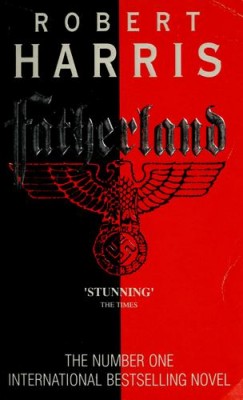
Fatherland.
Epic!
Archangel, fantastic.
Enigma, intriguing. 
Robert Harris comes in for a little criticism next. 
Pompeii, the first of the ancient Rome trilogy was a great read and quite different from his first few books, but the last in the series, Lustrum, was a bit boring, lacking the punch and originality of the others.
'The Ghost' was made into a rather interesting film and came with a clever twist at the end and 'The Fear Factor' was pacey and religiously researched. Now I've got 'An Officer and a Spy' in the to read pile, so I can't pass judgement on his latest yet, but what a diverse mix of genre's and subject matters, from fictional outcomes of WWII and spying in 1940's England, through Stalin's Russian, to Rome in the height of its power, Robert Harris has written historical fiction like no other author I've read and I can't wait for what comes next.
I really need to get on with my own writing and follow in this eminent authors booksteps.
Inspiration for the day goes to all those lovely people who worked tirelessly to keep the country running when the big storms hit.